
University of Greater Manchester
Deane Road, Bolton, BL3 5AB.
Back to menu
Back to menu
Back to menu
16/11/2026
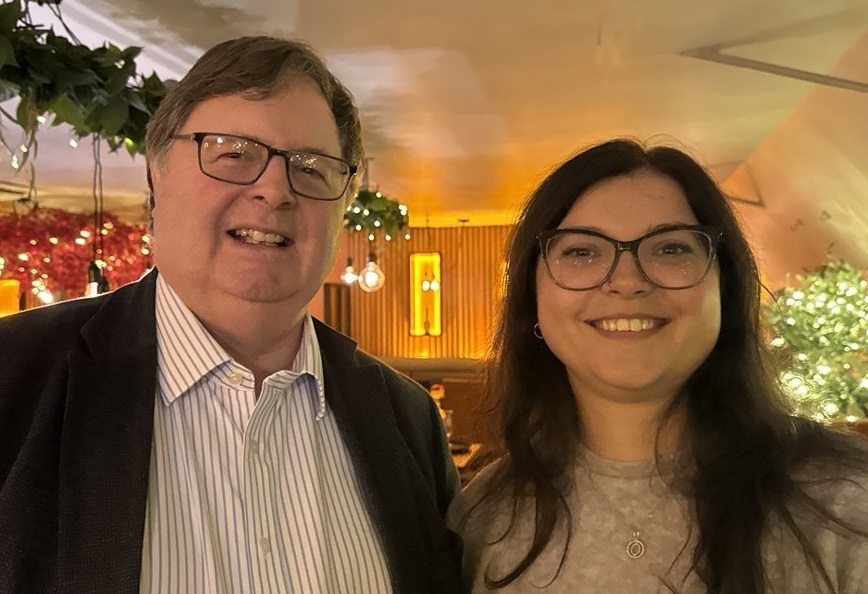
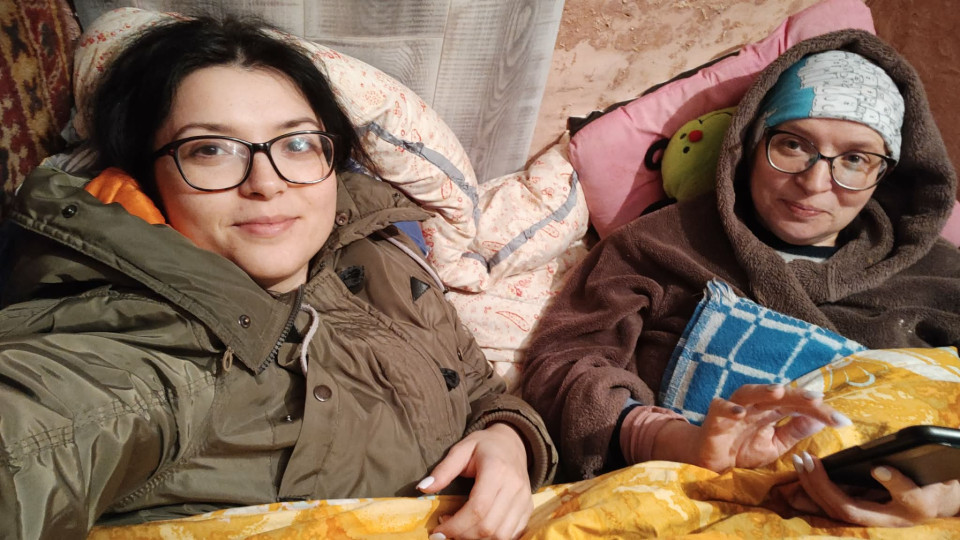
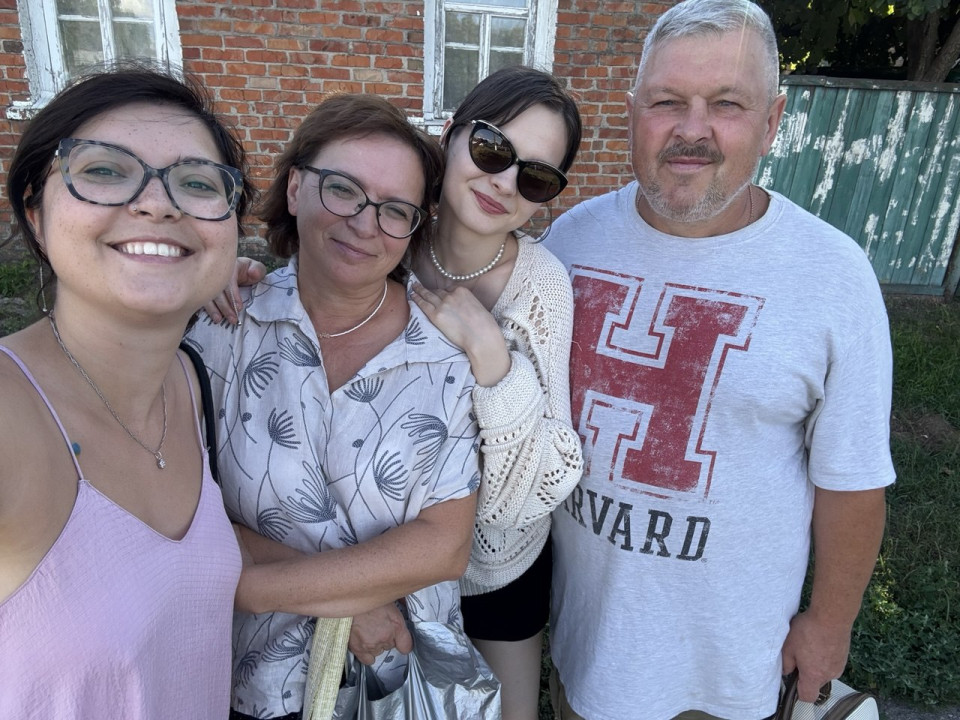
University of Greater Manchester student Olha Dovhopola examined mental health those who stayed in war-torn country and others who fled
Ukrainian refugee Olha Dovhopola poses a simple question – if a hostile country began bombing Bolton today, what would you do? Stay or leave?
Olha, a psychology Master’s student at the University of Greater Manchester, said: “40 million Ukrainians faced this exact decision on 24 February 2022.”
The 33-year-old, who fled Ukraine weeks after the outbreak of war four-and-a-half years ago, has carried out research into the brutal conflict’s effects on the mental health of those that stayed and those who left her country.
Olha was brought up in Romny, a small town in the north east of Ukraine, where her parents Oleh and Oksana still live, under the constant threat of attack from Russia.
Before the war began she was living in Kyiv on her own. Her younger sister Appolinariia was also in living in the capital, but at the opposite end of the city.
Olha said: “Obviously before the war began everyone had been talking about what might happen with Russia and I had put together an emergency bag in case I needed to leave quickly.
“I awoke at 6am on 22 February, after hearing an explosion just two or three kilometres away. Then it was just more and more explosions and all my friends were posting on Facebook about what was happening around the country.
“It was the most horrible day of my life. A girl friend of mine was killed on that first day.”
After much deliberation about whether she should stay and in a country under attack or face the emotional pain and discomfort of leaving, Olha made the heart-rending decision to leave Ukraine. However, her father could not, as he was aged under 60 and needed for the war effort.
She said: “So my mum and dad stayed, as did my sister. As she had a partner she didn’t want to leave. I had no partner or children, but it was horrible to leave my family.”
Olha, who had been working as a marketing manager for a zoo in Kyiv, left Ukraine in March 2022 and initially went to Belgium when her friend invited her to stay with her in safety, while she waited to come to the UK.
She also had a friend in the UK who was living and studying in Manchester and was able to come to this country at his invitation, where she has been living for the past four years.
“When I first came here I was so lost. I had built a life for almost 30 years in Ukraine and never expected to have to leave,” Olha said.
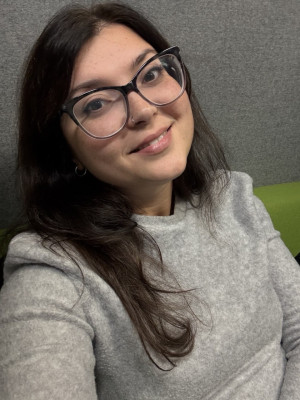
“There I had friends, a home, a career, family and a stable life and that was all gone in one day.
“For the first year I was here I cried almost every day. I feel safe here but all the time on the news you can see all the explosions and people being killed in Ukraine. It made me feel pain for my country and the people still living there. They are experiencing the war.”
Olha arrived with just a backpack as she said she was not expecting the war to last very long. She continued to pay rent on her home in Kyiv until just last year but with no end in sight to the conflict, she stopped renting and her mother cleared out her possessions.
She worked for a few companies in the UK, but had always wanted to work in the field of psychology. To do that, she knew she needed a Master’s in psychology.
She saw the MSc Psychology (Conversion) programme at the University of Greater Manchester and as Bolton was not too far from where she was living in Fallowfield, she applied for the course.
The one-year programme finished earlier this year. Olha is awaiting her final result and is due to graduate next July.
She said: “It was really difficult at first but I worked hard on all my assignments and started to receive good marks. I had amazing support from my programme tutors, Ana Campos and Pedro Vital, as well as my dissertation supervisor Professor Jerome Carson (the University of Greater Manchester’s Professor of Psychology). It was very intense, with six different courses as part of the programme.
“I have loved studying at the University of Greater Manchester. Everyone has been so welcoming and my tutors have been amazing. They have been there for me any time I needed them, they have made me feel heard and seen and my opinions respected.
“Jerome gave me lots of advice and support. Meeting him has been one of the best things that has ever happened to me in my life. His advice has been amazing.”
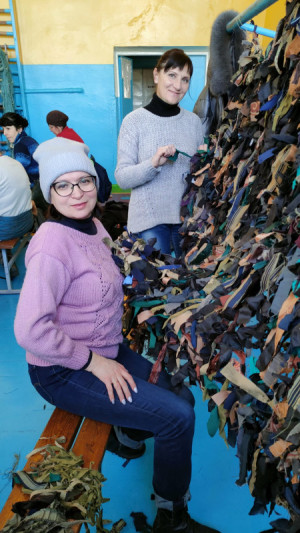
Olha added: “I decided to do mixed method research about the situation in Ukraine and how people living there during the war and those who had to leave were coping.
“I interviewed six psychotherapists in Ukraine. I wanted to know how they had the will to carry on living in the middle of a war … what gave them hope or meaning.
“The answers were not what you would necessarily expect. One man who lived on his own and experienced regular frequent blackouts, bought a Bluetooth speaker. When all the power went out he would play Latin music and dance to it on his own in the dark.
“Another lady who was from the Donetsk region, had to leave and moved to Kyiv. She admitted that there were days when she found it very hard to find any meaning to her life. But one day she went past a coffee shop and saw that they had a new kind of cake in the window and something as small as that lifted her out of the depression.”
Olha also asked people still living in Ukraine and those in exile to complete a survey. Around 170 who are still in the country completed theirs and 200 who had left because of the war.
She said whatever their situation, the levels of anxiety and depression were similar - for different reasons.
“This was related to human connection and their financial situation,” Olha said. “People living in Ukraine, despite the war, still have human contact. They are in physical danger, but they are able to connect with people who can relate to their experience and they can meet and bond with, even if it is in a shelter.
“People who have left the country do not have that kind of human connection. Despite not being in physical danger, it is that human connection they crave.”
Olha presented her research at a Psychology of Mental Health Conference on the University of Greater Manchester campus on 10 November.
Professor Carson said: “When Olha she came to me to discuss her dissertation, I suggested we do something about the situation in Ukraine.
“She interviewed six psychotherapists about how they were living though the war. If she hadn’t escaped to the UK, this would have been Olha. She also did a large survey of those living in exile and those at home, many of whom have been displaced because of the war.
“We cannot imagine what it must be like. All we can do is support Olha and help her fulfil her dreams. She deserves no less.”
Olha said: “I plan to publish my research and then I would like to do a PhD and take my research further, but that depends on funding. I would like to become a clinical psychologist. If and when the war ends, I would like to continue to build a life in the UK, to contribute to society as much as I can.
“The main thing I learned from this research was that being human is enough to give many people meaning.
“They all said that the material stuff they have collected over their lives doesn’t really matter when you don’t know from one day to the next whether you will be alive the next morning.”
Download the app for your smartphone from: